
Summit ends with a narrower trade pact and a wider disagreement
Delegates signed a framework covering critical minerals, then split publicly over enforcement.
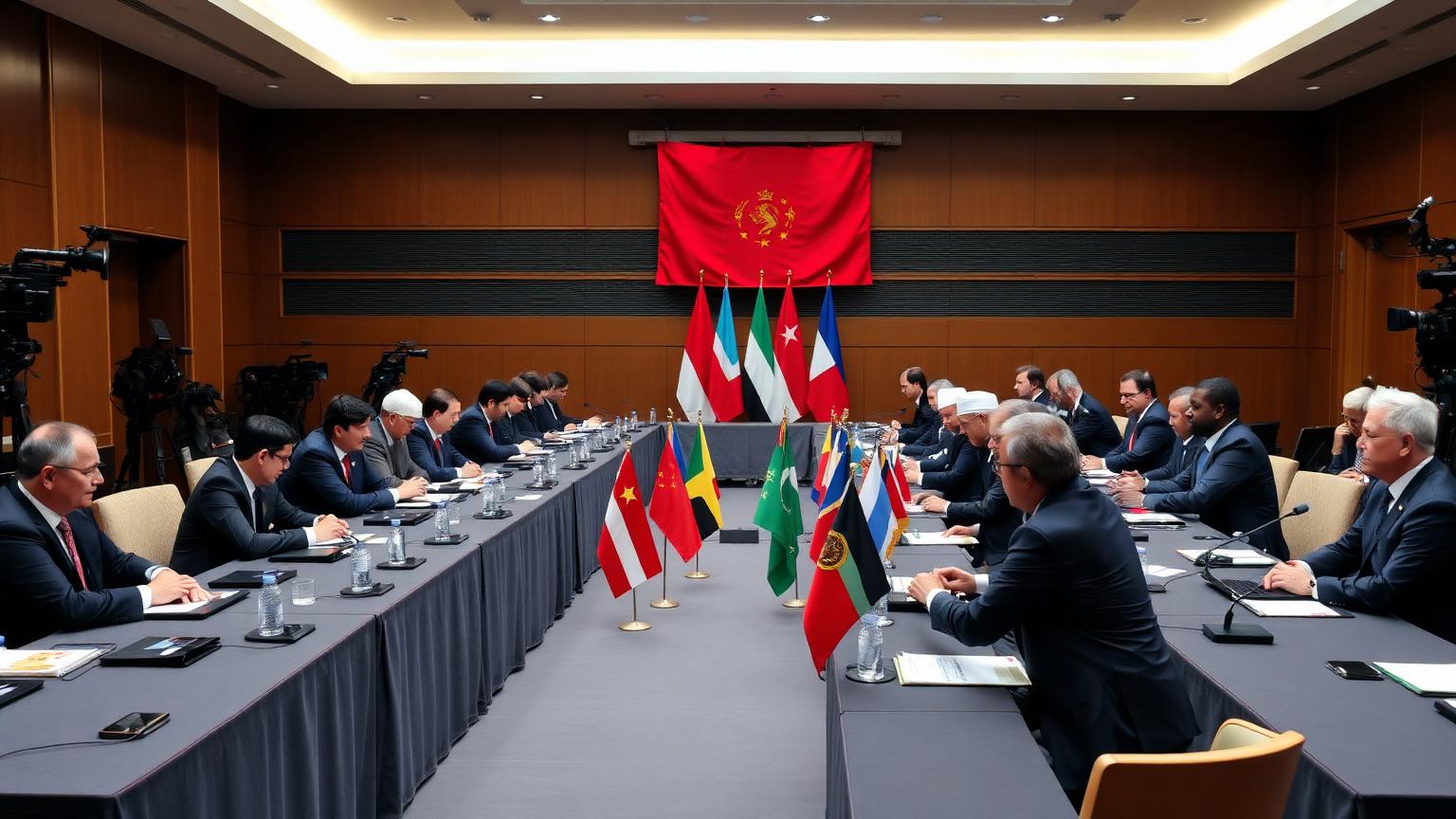
- A framework covering critical minerals was signed by nineteen of the twenty-four delegations.
- Enforcement provisions were removed from the final text at the request of three delegations.
- Follow-up technical talks are scheduled for October.
Machine-generated from the reporting on this page and reviewed by an AMN editor before publication.
Three days of negotiation ended Thursday with nineteen of twenty-four delegations signing a framework agreement on critical minerals, and with an unusually public disagreement over what the framework actually obliges anyone to do.
Enforcement provisions present in every draft until Wednesday evening were removed from the final text at the request of three delegations, who argued that binding arbitration was incompatible with existing domestic legislation.
The signed framework establishes shared reporting standards, a joint reserve mechanism and a schedule of technical talks beginning in October.
Officials from two of the abstaining delegations said privately that they expect to join before the October round, contingent on the reporting annex being reopened.
For all the friction, the agreement is the first multilateral text on the subject to survive to signature, and negotiators on both sides of the enforcement question described that as the meaningful outcome.